Will AI Replace Recruiters? What AI in Recruitment Should Really Do
AI in recruitment is everywhere right now. But the end goal shouldn't be to replace recruiters. It should be to give them better tools, so they spend less time on admin and more time with the people they actually want to hire.
AI in recruitment is becoming an increasingly interesting topic, and I hear about it in almost every conversation I have with hiring teams. But I think there's an important distinction to make. The end goal shouldn't be to replace recruiters. It should be to give them the best tools to do their jobs more effectively.
Will AI Replace Recruiters?
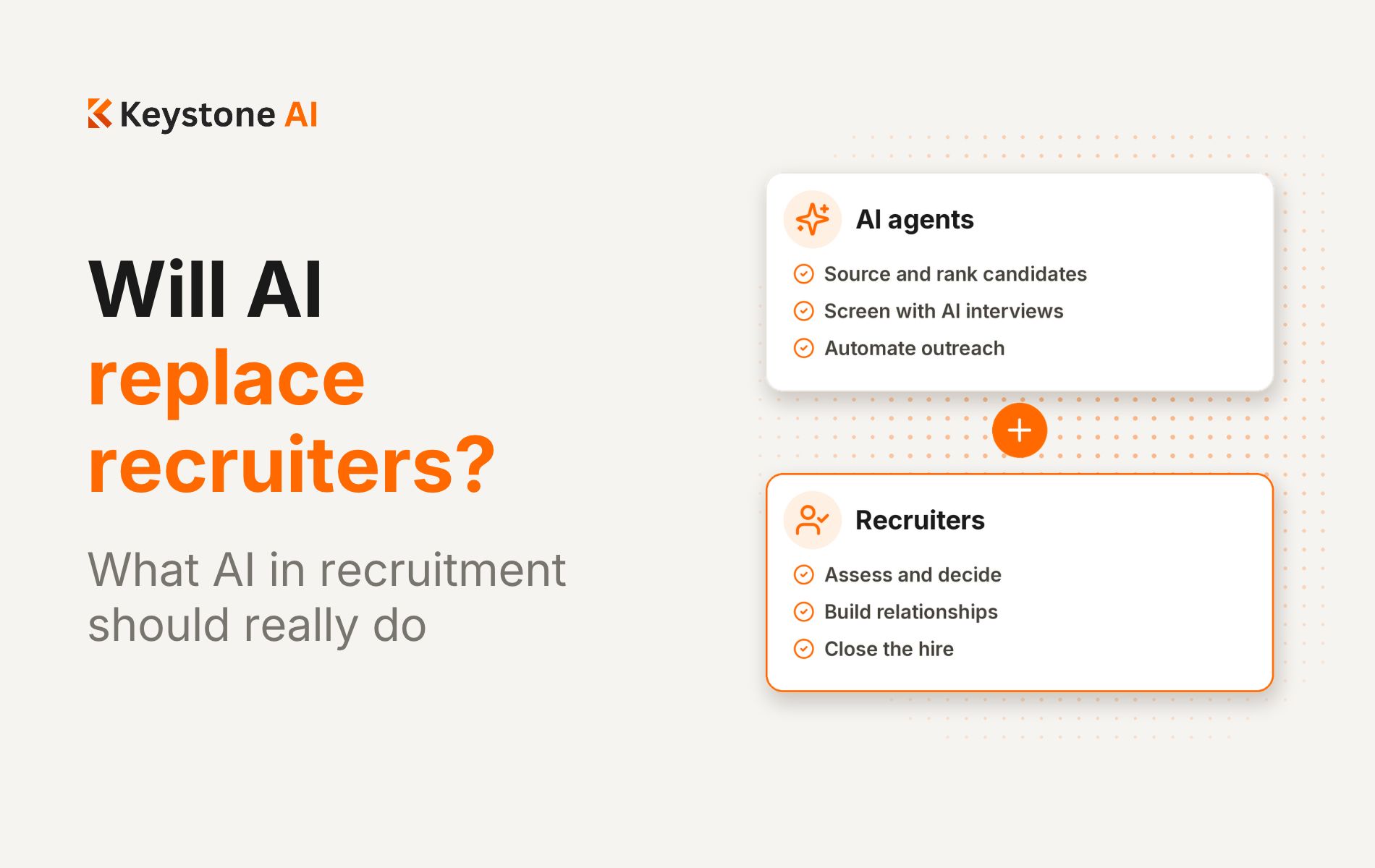
No, and it shouldn't try to. AI is very good at the repetitive parts of recruiting: going through hundreds of applications, ranking profiles against a brief and running first-round screening. It is not good at the parts that decide whether a hire works out, like understanding what a hiring manager really needs, reading a candidate's motivation, or closing an offer.
When people ask me whether AI will take over recruitment, I usually turn the question around. The real question isn't whether AI will become part of the process. It's whether businesses will use it effectively.
Where AI Helps Recruiters Most
The biggest gains come from the tasks that take the most time and add the least judgment.
- Screening large volumes of applications. Going through hundreds of applications for one role can take days. AI can sort and rank them in minutes, so recruiters start with the strongest matches.
- Finding candidates who didn't apply. AI sourcing can search large talent pools and surface people with the right skills, including passive candidates who aren't actively looking.
- Initial candidate screening. Structured first-round interviews, run by AI and reviewed by the hiring team, mean every candidate gets the same questions and a fair first look.
- Follow-ups and scheduling. Automated outreach and reminders keep candidates engaged without a recruiter chasing every email.
None of this replaces the recruiter. It clears the way for them.
What AI Shouldn't Do in Recruitment
Just as important as knowing where AI helps is knowing where it shouldn't lead. AI should not make the final hiring decision. A ranked list or an interview score is a starting point, not a verdict, and someone on the hiring team should always review it before a candidate moves forward or is rejected.
AI also learns from data, and data can carry bias. If past hiring favored certain backgrounds, a tool trained on it can repeat that pattern. That's why it matters to review AI output, check who is being filtered out and keep a clear record of why each candidate progressed.
And AI can't build trust. Candidates decide whether to accept an offer based on how they were treated, how well the role was explained and whether someone took the time to answer their questions. That part of the process is still about people, and it's often where good hires are won or lost.
What This Looks Like in Practice
This is one of the biggest challenges in recruitment. Hiring teams often handle multiple vacancies at once, each with large volumes of applications and interviews. When that happens, the work that matters most is the first to get squeezed: talking to candidates, understanding what they want, and helping hiring managers make a good decision.
By automating repetitive and time-consuming tasks, recruiters can spend less time on administration and more time talking to the people they actually want to talk to. That redirects their focus to assessing candidates and making the best hiring decisions. For a wider view of the tools involved, see our guide to recruitment technology.
Why the Human Side of Recruitment Still Matters
A hire is a decision about a person, and people want to be assessed by people. Candidates want to know who they'll work with, what the role really involves and whether the company is a good fit. Hiring managers want someone who understands their team, not just a ranked list.
Ultimately, new technology should support the human side of recruitment, not make it disappear. That's also how we built Keystone AI. AI agents find, shortlist and interview candidates, and then a person takes it from there: a Keystone AI consultant who closes the hire, or the client's own team. Most AI recruiting tools stop at the software. We think the last mile still needs a human.
How to Use AI in Recruitment Effectively
From the conversations I have with companies, the ones getting the most out of AI tend to follow the same few principles:
- Start with the bottleneck. Pick the step that slows you down most, usually screening or sourcing, and apply AI there first.
- Keep people in charge of decisions. Let AI rank, screen and schedule, but keep shortlists, interviews and offers with your team.
- Be clear about the brief. AI is only as good as the criteria you give it, so spend time defining the role with the hiring manager before you search.
- Measure what changes. Track time to shortlist, candidate quality and how much time recruiters get back, so you know whether it's working.
- Be open with candidates. Tell them when AI is part of the process and how their information is used.
If you're planning hires before roles open, a talent map is a good place to start, and AI can help fill it with real candidates.
The Real Challenge
A situation I hear about often: a small hiring team has several roles open at once, each with a long list of applicants. Most of their week goes on reading resumes and booking calls, and by the time they reach the strongest candidates, some have already accepted other offers. The problem usually isn't a lack of good candidates. It's a lack of time to get to them.
The Question Isn't Whether, It's How
AI will become part of recruitment, if it isn't already. As our CEO Chris Watkins wrote, the data points to more jobs, not fewer.
The companies that get it right will be the ones that use AI to give their recruiters more time for people, not less.
Frequently Asked Questions
No. AI handles repetitive tasks like screening applications, ranking profiles and scheduling, but recruiters are still needed to understand what hiring managers need, assess candidates and close offers. The goal of AI in recruitment is to give recruiters better tools, not to replace them.
AI is mostly used to source candidates from large talent pools, rank applications against the role, run structured first-round interviews and automate outreach and follow-ups. The hiring team then reviews the results and makes the decisions.
The main benefit is time. By automating repetitive work, AI lets recruiters spend more time talking to candidates and hiring managers. It can also make first-round screening more consistent, because every candidate gets the same questions.
It shouldn't. AI can screen and rank candidates, but people should make the final hiring decisions, review AI output for bias and be able to explain why a candidate moved forward or not.
An AI recruiter is software that uses AI agents to do recruiting tasks such as sourcing, matching, outreach and screening interviews. Some platforms, like Keystone AI, pair those agents with human recruiters who finish the hire.
- Recruitment Automation
- Human in the Loop
- Candidate Screening